Scrum master bootcamp: fast-track your Agile career
Tom • February 11, 2026
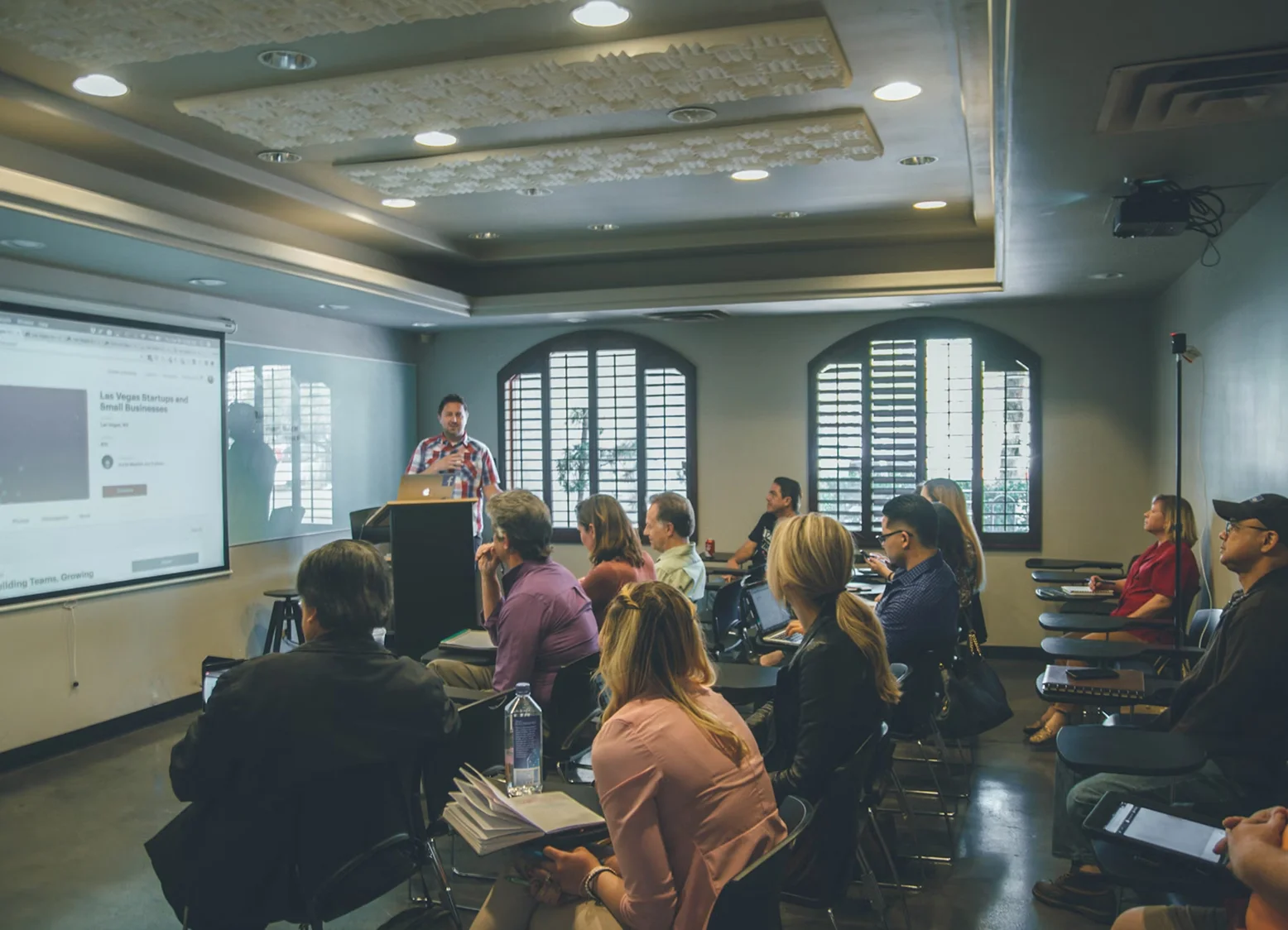
The global agile workforce has grown to nearly 27 million professionals, yet hiring managers consistently report that the majority of scrum master candidates arrive without the practical facilitation and delivery skills the role now requires. A scrum master bootcamp promises to close that gap fast — compressing months of self-study, certification prep, and coaching practice into a single intensive program. But not every bootcamp delivers. This guide compares the best scrum master bootcamp options in 2026, what separates a credible program from glorified exam prep, and how to pick the fastest path to a role that actually sticks.
What is a scrum master bootcamp?
A scrum master bootcamp is a short, intensive training program — typically 2 days to 12 weeks — that takes you from beginner to certification-ready scrum master. Most bootcamps combine live instruction on the Scrum Guide, hands-on facilitation exercises, mock sprints, and prep for a recognized certification such as the CSM (Certified ScrumMaster) or PSM (Professional Scrum Master).
Bootcamps differ from traditional scrum courses in three ways:
Pace. They condense content into days or weeks, not months.
Depth of practice. Good bootcamps include role-plays, live retrospectives, and coaching feedback — not just slides.
Career outcomes. Many include job support, portfolio reviews, and certification vouchers.
Who should consider a scrum master bootcamp?
Career changers moving into agile roles
Non-technical professionals — from sales, marketing, operations, or QA — often use a bootcamp to compress the learning curve. The scrum master role is accessible to non-IT candidates if they build strong facilitation, coaching, and delivery skills, and a well-structured bootcamp targets those directly.
Developers and analysts stepping into agile leadership
Engineers already working on agile teams often want the credential and the vocabulary to formally lead ceremonies and coach teammates. A bootcamp formalizes skills they've practiced informally for years.
L&D managers training internal scrum masters
Corporate L&D teams use group bootcamps to certify several internal candidates at once — usually with a preference for enterprise-friendly options like the SAFe Scrum Master (SSM) or Disciplined Agile Scrum Master (DASM) credential.
How to evaluate a scrum master bootcamp in 2026
Bootcamps are sold on speed and pass rates, but those metrics alone don't predict career outcomes. Use this 6-point evaluation framework before you pay.
1. Format and live practice hours
Scrum Alliance requires 16 hours of live instruction for CSM training — that's the floor, not the ceiling. The best bootcamps layer another 10–40 hours of facilitation drills, retrospective role-plays, and mock sprint planning on top. Pre-recorded video alone is not a bootcamp; it's a course.
2. Instructor credentials
Look for trainers with the Certified Scrum Trainer (CST), Professional Scrum Trainer (PST), or SAFe Practice Consultant (SPC) designation. These credentials are hard to earn and a strong proxy for teaching quality.
3. Certification alignment
Decide which credential you want first — CSM, PSM, SSM, or DASM — and pick a bootcamp whose curriculum maps directly to that exam's learning objectives. Scrum Alliance publishes the CSM Learning Objectives publicly; Scrum.org publishes PSM focus areas. Any reputable bootcamp will point you straight to them.
4. Hands-on practice and coaching
Ask specifically: "How many mock ceremonies will I facilitate, and who gives me feedback?" A bootcamp that can't answer that is selling exam prep, not scrum mastery.
5. Career support
For bootcamps above $2,000, expect resume review, LinkedIn coaching, mock interviews, and access to an alumni network. Bootcamps that market "job guarantees" usually hide steep fine print — treat those claims skeptically and read the contract.
6. Post-bootcamp skill retention
Retention is where most bootcamps quietly fail. Research on the forgetting curve consistently shows that learners lose a large share of new information within 24 hours unless they reinforce it deliberately. The best programs pair an intensive week with spaced microlearning and on-the-job practice windows — which is where modern adaptive platforms like SkillBake come in (more on that below).
CSM vs PSM vs SAFe scrum master bootcamps: which path fits you?
The certification you choose shapes the bootcamp you should buy. Here's the short version.
Certified ScrumMaster (CSM) — Scrum Alliance
Best for beginners who want a widely recognized credential backed by structured live training. CSM requires a 2-day course from a Certified Scrum Trainer, followed by a 50-question online exam with a 74% passing score. Total cost usually runs $500–$2,000, including the course and a two-year membership; renewals run $100 every two years.
Professional Scrum Master (PSM I) — Scrum.org
Best for self-directed learners and budget-conscious candidates. The PSM I exam costs around $200, requires no mandatory training, and is valid for life. The exam is harder (85% to pass), so a bootcamp or adaptive prep course is strongly recommended even though it isn't required.
SAFe Scrum Master (SSM) — Scaled Agile
Best for scrum masters working in large enterprises running the Scaled Agile Framework. SSM bootcamps run 2 days, cost $550–$1,099, and focus heavily on Program Increment (PI) planning and Agile Release Trains.
Disciplined Agile Scrum Master (DASM) — PMI
Best for PMI-aligned professionals who want an agile credential that pairs well with the PMP. DASM bootcamps are typically 2 days and cost $1,500–$2,000.
Best scrum master bootcamps to consider in 2026
There are dozens of scrum master bootcamps on the market. These are the categories that consistently show up in independent comparisons — and what each is good for.
For recognition and instructor-led rigor: Scrum Alliance CSTs
Any bootcamp run by a Certified Scrum Trainer and endorsed by Scrum Alliance will prepare you for the CSM. Expect a 2–3 day intensive format, live exercises, and a high pass rate. Providers like Agilemania, KnowledgeHut, and Agilious consistently deliver this tier.
For exam mastery on a budget: Scrum.org PSM-focused bootcamps
Scrum.org's own Professional Scrum Master training is the gold standard for PSM prep. Independent bootcamps run by PSTs often cost less and include more mock exams — a good fit if you learn well from tests.
For enterprise and federal environments: ACT-IAC, Agilious, Scaled Agile partners
Government and enterprise-focused bootcamps — such as ACT-IAC's Certified Scrum Master program delivered with Agilious — tailor case studies to complex organizational delivery, compliance constraints, and multi-team coordination.
For career changers on a budget: Simplilearn and Udemy-linked cohort bootcamps
Simplilearn consistently appears in bootcamp comparisons with packages ranging from free trials up to ~$3,500. Udemy-linked bootcamps with live cohorts can be had for under $500 if you already have some agile context — a reasonable entry point compared with the marathon formats on Coursera, Udemy, or LinkedIn Learning.
For developers transitioning into scrum mastery: KnowledgeHut and Agilemania
Both specialize in technical-team scrum mastery and include real-world case work from software delivery environments — useful if you're moving from engineering into delivery leadership.
How much does a scrum master bootcamp cost?
Scrum master bootcamps cost $200 at the low end (PSM self-paced exam prep) to $20,000 at the high end (premium cohort programs with placement support). Most professionals pay $500 to $3,000 for a credible CSM or PSM bootcamp.
A realistic 2026 pricing map:
Self-paced PSM exam prep: $200–$500
Standard CSM bootcamp (2–3 days, live): $500–$2,000
SAFe Scrum Master (SSM) bootcamp: $550–$1,099
Advanced CSM (A-CSM) bootcamp: $800–$1,495
Premium cohort bootcamp with career support: $3,000–$20,000
Price rarely correlates with outcome above ~$2,500 unless the program includes serious career coaching, real mentor access, and a verifiable alumni network. Anything above that range without those features is paying for branding.
How to prepare for a scrum master bootcamp
A scrum master bootcamp is an accelerator, not a foundation. Candidates who arrive cold burn half the program playing catch-up. Prepare with these five steps.
Read the Scrum Guide (roughly 14 pages). It is the single source of truth for Scrum. Re-read it the night before day one.
Get comfortable with agile terminology. Know the difference between agile, Scrum, Kanban, XP, and SAFe before the bootcamp begins.
Build foundational facilitation skills. Running retrospectives, coaching conversations, and handling conflict are core scrum master skills. A bootcamp teaches techniques faster when you already have the basics.
Practice with short, adaptive lessons. Spaced, bite-sized practice outperforms cramming for skill retention — which is why SkillBake, an adaptive skill learning platform, sequences agile and facilitation content into short lessons that adjust to your level as you progress.
Decide your target certification. Don't enter a bootcamp undecided between CSM and PSM; the curriculum differs enough to matter.
What to do after the bootcamp ends
Certification is the starting line, not the finish. The hiring market consistently values demonstrable delivery and coaching skills above the credential itself.
Run a real (or simulated) sprint within 30 days
Whether at work or on a volunteer project, facilitate a full sprint cycle while the content is fresh. Retention drops sharply if you wait.
Build a scrum master portfolio
Document retrospectives you ran, team improvements you drove, flow metrics you influenced, and stakeholder outcomes you shaped. Hiring managers respond to artifacts, not slogans.
Keep skills sharp with spaced practice
Scrum master skills atrophy fast without use. Short, regular reinforcement beats occasional deep dives — which is exactly the model adaptive, career-relevant microlearning is built for.
Layer complementary skills
The strongest 2026 scrum masters combine core Scrum with AI fluency, flow and Kanban metrics, product thinking, and stakeholder communication. That T-shaped skill stack is the profile hiring managers now explicitly call out in job descriptions.
Scrum master bootcamp vs adaptive learning: which builds real skills?
A scrum master bootcamp is the fastest way to earn a credential. An adaptive learning platform is the fastest way to build lasting skill. The two aren't competitors — they're complements.
Bootcamps compress 40+ hours of instruction into a few days. That's effective for exam prep and vocabulary, but it fights against how human memory actually works. Adaptive platforms solve the retention problem with short, personalized lessons that adjust to your pace, revisit weak areas, and expand into adjacent skills once you've mastered the basics. SkillBake, an adaptive skill learning platform focused on AI, project management, and growth mindset skills, is built specifically for this kind of compounding, career-relevant practice — which is why it outperforms static video libraries like the ones on Coursera, Udemy, LinkedIn Learning, or Pluralsight for skill retention.
For aspiring scrum masters, the most efficient 2026 path looks like this:
Before the bootcamp: Use SkillBake's adaptive learning paths to build agile fundamentals, facilitation, and coaching literacy so you arrive prepared.
During the bootcamp: Focus entirely on live practice, real coaching feedback, and certification mastery.
After the bootcamp: Return to adaptive microlessons to maintain sharpness across Scrum, Kanban, product thinking, and the AI skills that scrum masters now need.
This stacked approach gives you the credential that unlocks interviews and the competence that keeps you employed once you're in the role.
Frequently asked questions about scrum master bootcamps
How long does a scrum master bootcamp take?
Most scrum master bootcamps take 2 to 5 days for certification-focused formats (CSM, PSM, SSM) or 4 to 12 weeks for cohort programs that include career coaching. Expect 16+ hours of live instruction as the baseline for any credible CSM bootcamp.
Are scrum master bootcamps worth it in 2026?
Yes — if you choose a bootcamp aligned to a recognized certification (CSM, PSM, or SSM), delivered by a CST or PST, with enough live practice to actually build facilitation skill. Skip bootcamps that lean entirely on pre-recorded video; those are courses, not bootcamps.
Can you become a scrum master without a bootcamp?
Yes. The PSM I certification from Scrum.org requires no training — you can self-study the Scrum Guide, reinforce skills on an adaptive learning platform like SkillBake, and sit the $200 exam. Bootcamps accelerate the path and add live coaching, but they aren't mandatory.
Do scrum master bootcamps guarantee jobs?
Most do not, and guarantees that exist usually come with strict conditions on participation, interview volume, and salary thresholds. Focus instead on bootcamps with strong alumni networks, portfolio support, and verifiable employment outcomes.
Which scrum master certification do employers prefer?
Employers most often request CSM (Scrum Alliance) or PSM (Scrum.org). In enterprises running SAFe, SSM (SAFe Scrum Master) is frequently preferred or required. Holding both CSM and PSM is not redundant — it signals depth across two respected ecosystems.
Is a scrum master bootcamp good for non-IT professionals?
Yes. The scrum master role is industry-agnostic, and many effective scrum masters come from operations, marketing, or HR backgrounds. Strong facilitation, coaching, and communication skills matter more than a technical resume — and those are exactly the skills a good bootcamp is designed to build.
The fastest, credible path to scrum master in 2026
No scrum master bootcamp alone will land you the role. A bootcamp gives you the certification and the vocabulary. What gets you hired — and keeps you employed — is the combination of credential, portfolio, and genuinely sharp skills in facilitation, flow, and delivery.
If you want the fastest credible path:
Build your foundation with adaptive learning before enrolling in a bootcamp.
Pick a certification that matches your market (CSM for general roles, PSM for self-directed candidates, SSM for SAFe environments).
Choose a bootcamp with a CST or PST instructor, real practice hours, and career support.
Keep your skills sharp with spaced, career-relevant microlearning after the bootcamp ends.
If you're ready to stop watching passive tutorials and start building real agile skills with a path tailored to your goals, pace, and target certification, that's exactly what SkillBake is built for.
Related articles
Keep building practical skills with more guides from SkillBake.



Start your learning journey today!
Build practical skills in AI, product, agile, and design with focused lessons made for busy professionals.